
Coming Back to Life From ‘Social Death’: Creating and Regulating Women-Only/Feminist Spaces with/for Women Refugees in the UK
By: Zeynep kilicoglu (she/her)
This article asks whether gendered spaces can offer opportunities for subversive humanitarianism by supporting refugee women’s social connectedness, autonomy and agency. Drawing on ethnographic methods, it argues that such spaces foster individual and collective resilience through which women transcend the ‘social death’ and dehumanisation imposed on them.
The UK government’s May 2025 white paper marks a further entrenchment of restrictive immigration policy, in which migrants are not regarded as human beings but ‘desirable’ and ‘undesirable’ objects. It reinforces exclusionary narratives that depict asylum-seekers as apolitical, passive, and incapable of contributing to public life; thereby, legitimising the denial of their entitled rights under the 1951 UN Refugee Convention. Therefore, aslyum-seeking becomes a site of existence, which Achille Mbembe calls “death worlds”.
In the “death worlds”, asylum seekers are deprived of access to everyday relationships, spaces, and resources available to others. This deprivation reduces them to a state of “living dead,” stripping them of personhood. The idealised refugee personality is helpless and passive and therefore, feminised and depoliticised. Women experience a double oppression, both as asylum-seekers and as gendered subjects, deepening their dehumanisation, social isolation, and exposure to violence. This depoliticisation is reconstructed by refugee management practices rooted in conventional humanitarianism, which is not interested in offering a structural change in the future. As a result, women become charity objects and are cast as ”unbelonging”, excluded from everyday spaces, and condemned to silence and isolation: again, to social death. These are normalised, legitimised, and perpetuated, especially amid the rise of anti-gender and anti-immigrant ideologies in the UK and beyond.
Within this context, the article asks whether self-identified feminist and women’s asylum organisations can offer alternative spaces that recognise refugee women’s personhood, humanity, and equality. I do not suggest that women-only spaces are without issues and hierarchies as they can reinforce binary essentialism, present women as victims and men as perpetrators. Nor do I assume that women are natural allies to each other: race, class, age, and sexual orientation shape how solidarity is imagined, built, and practiced. Yet these spaces hold potential: they may foster self-confidence, belonging, and social connectedness that translate into both individual and collective resilience, and they can build communities that resist the imposition of social death.
Drawing on ethnographic research and participant observation in 11 asylum organisations across London, Birmingham, Coventry, Cardiff, and Manchester, I examine how these spaces function. Through interviews with humanitarian workers and refugee women, I show how creating and regulating spaces for and with women counters social death by meeting everyday needs, such as food, maternal health, childcare, and legal assistance. These needs are often, obscured by gendered asylum barriers.
“The decoration of the physical environment itself matters: plants, posters, rugs and tea bars counter the clinic-like atmosphere of conventional humanitarian spaces, which asylum-seekers find intimidating and retraumatising”
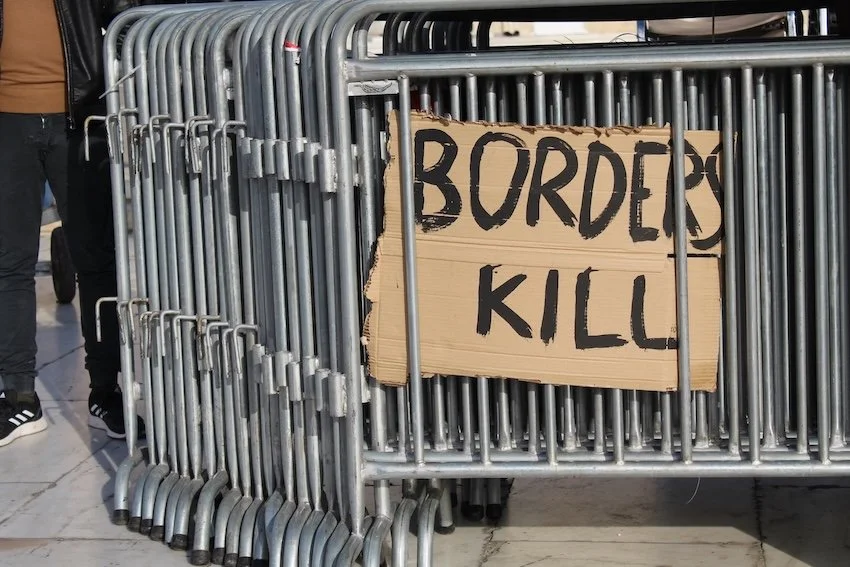
Photo by Evita Paraskevopoulou on Unsplash.
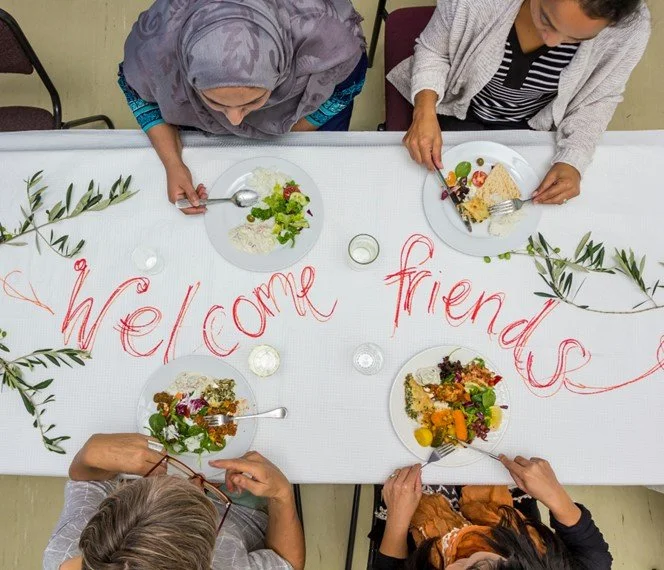
The women, interviewed in the process of this research, mention that such spaces also support fostering a sense of community ownership: they are their spaces, collectively created with others whose backgrounds and life experiences differ, but who find friendship and healing in reciprocal relationships that restore the value of experience and personhood. The decoration of the physical environment itself matters: plants, posters, rugs and tea bars counter the clinic-like atmosphere of conventional humanitarian spaces, which many women find intimidating and retraumatising. Such environments also allow humanitarian workers to feel more at ease, shifting their role from professional service providers to equal members of the community.
Building on this ethos of inclusivity and shared belonging, the organisations further institutionalise equality in their communities by drafting written documents such as bills of rights or constitutions. These documents regulate equal participation and minimise discrimination on the basis of ethnicity, language, religion, or marital status, so that participation remains open and self-identified. Together, these practices transform humanitarian care into a collective, egalitarian process that foregrounds dignity and agency of the asylum seekers.
They also facilitate networking and community-building by reversing gender hierarchies: men are excluded, granting women privileged status to counter male dominance in everyday spaces and public life. However, such forms of ‘empowerment’ can sometimes provoke new forms of violence and oppression in both private and public spheres. For instance, women may face disbelief and discrimination, as they are no longer be seen as fitting the category of ‘victims’. This can potentially catapult into women not being regarded as ‘authentic’ asylum seekers. Yet, the networking opportunities, informal practices of care, and friendships developed in these spaces reposition women not as passive recipients of aid imposed by humanitarians but as active community members, highlighting their agency and autonomy.
Overall, such spaces carry significant potential. The article highlights their contemporary relevance in a world marked by backlash against women’s, queer, and migrant participation in political life, showing how civic engagement and agency can be cultivated through spatial interventions. These strategies demonstrate how politics can be practiced from below in everyday spaces. This stands in contrast to conventional IR theory, which suggests that politics is shaped from above—behind the closed doors of military generals, politicians, and donors. In this sense, community spaces enact a practice of citizenship understood not as a legal status but as a political and social exercise of being a person.
Read the full article here: Coming back to life from “social death”: Creating and regulating women-only/feminist spaces with/for women refugees in the UK
Each blog post gives the views of the individual author(s) based on their published IFJP article. All posts published on ifjpglobal.org remain the intellectual property and copyright of the author or authors.
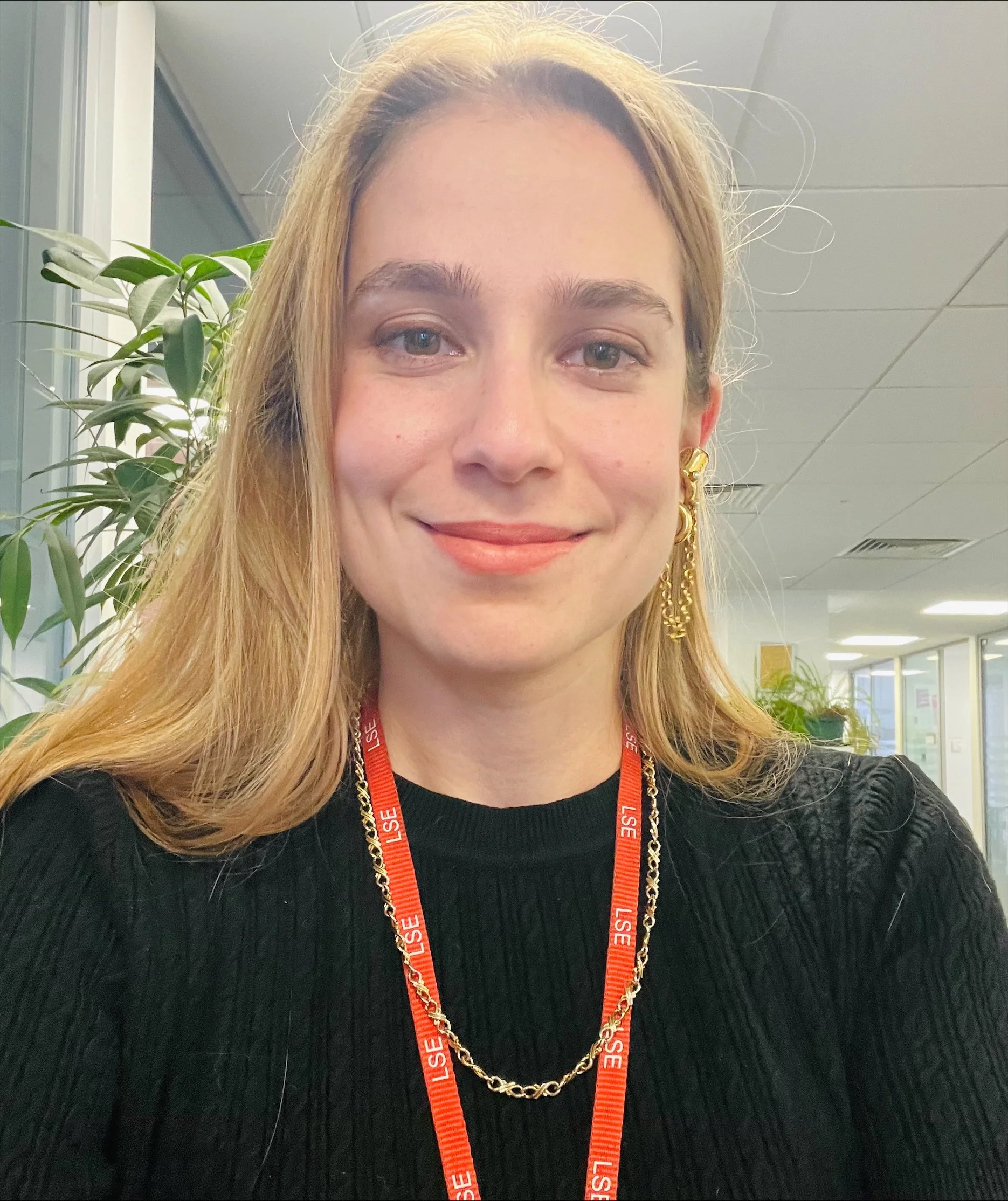
Dr. Zeynep Kilicoglu is an LSE Fellow in Gender and International Politics in the Department of Gender Studies at the London School of Economics and Political Science. She does feminist research in migration and forced displacement.